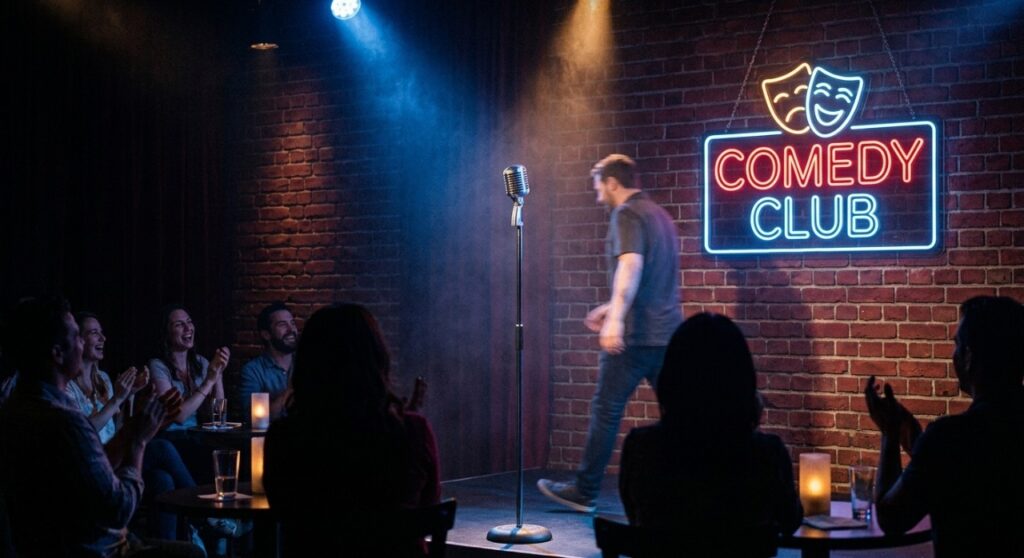

LONG BEFORE MEGA-STADIUMS AND STREAMING ALGORITHMS, AMERICA’S GREATEST ENTERTAINERS WERE FORGED IN SMALL, SMOKY ROOMS WITH NOTHING MORE THAN A BRICK WALL AND A MICROPHONE.
When you turn on late-night television, watch a Hollywood blockbuster, or stream a comedy special, you are witnessing an art form perfected in a very specific incubator: the American comedy club.
Unlike theaters or movie studios, comedy clubs were built for vulnerability, failure, and radical innovation. They served as cultural laboratories where legendary performers tested raw ideas, broke social taboos, and forever altered the landscape of pop culture.
Here is the story of how a network of small, intimate venues across the United States secretly reshaped modern American entertainment.
The iconic glow of a comedy club stage. Source: Etsy
1. The Birth of the Dedicated Comedy Club
In the mid-20th century, comedians didn’t have venues designed specifically for them. They were secondary acts performing in noisy nightclubs, jazz bars, or resort dining rooms—often competing with dinner plates and music bands.
Everything changed in the 1960s with the creation of dedicated comedy spaces like The Improv in New York (1963) and The Comedy Store in Los Angeles (1972).
- Why dedicated venues mattered:
- A focused audience: People paid specifically to listen to comedy, allowing performers to go beyond quick surface-level jokes.
- The signature brick wall: Simple stage aesthetics focused 100% of the crowd’s attention on the performer.
- Late-night workout spots: Comedians gained space to experiment with unscripted, spontaneous material.
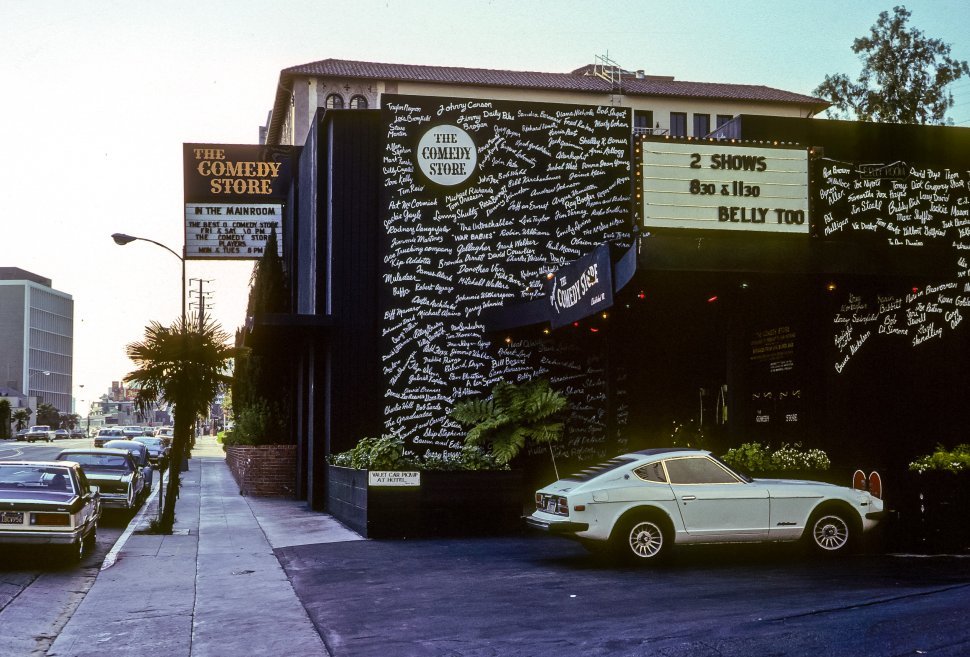
Source: vintagestockphotos
2. Cultural Laboratories: Pushing the Boundaries of Free Speech
Comedy clubs weren’t just about entertainment; they were ground zero for social and political dialogue. Because these venues operated outside mainstream broadcast television regulations, comedians could tackle topics that TV networks refused to touch.
A Safe Space for Uncensored Ideas
In the 1970s, venues like The Comedy Store became battlegrounds for social commentary:
- Political Critique: Comedians dissected the Vietnam War, presidential scandals, and government hypocrisy in real time.
- Breaking Social Taboos: Topics surrounding race, sexuality, and mental health were explored openly for the first time on stage.
- Testing Limits: Comedians learned instantly—through laughter or uncomfortable silence—where society’s invisible lines were drawn.
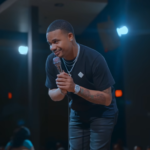
Source : Youtube / (Harmon Leon)
3. The Star-Making Machine: From Club Stages to Hollywood
If you look at the major Hollywood stars of the late 20th century, a staggering number of them were discovered directly on comedy club stages.
Producers, talent agents, and network executives made regular midnight trips to local clubs to find fresh talent. A single great set at a club could lead to a late-night TV appearance on The Tonight Show Starring Johnny Carson, which could turn an unknown performer into a household name overnight.
Local Comedy Club Stage ➔ Late-Night TV Appearance ➔ Hollywood Movie Franchise
Comedians like Jim Carrey, Whoopi Goldberg, Dave Chappelle, and Robin Williams developed their signature speed, improv skills, and stage presence through thousands of hours on club stages before dominating the box office.
4. Why the Live Club Experience Can Never Be Replaced
In an era dominated by short-form videos and AI algorithms, you might wonder if physical comedy clubs are still relevant. The answer is a resounding yes.
- Unfiltered Immediate Feedback: Unlike filmed specials, live club performances offer instant, unedited reactions. A joke either works or it fails in real time.
- The “Anything Can Happen” Energy: Top-tier comedians frequently drop by local clubs unannounced to test new material, giving clubgoers a rare, intimate look at the creative process.
- A Shared Human Connection: Sitting in a dark room laughing out loud alongside strangers remains one of the purest forms of collective entertainment left today.
Final Thoughts: The Unbroken Legacy
The modern entertainment industry wouldn’t look the same without the influence of comedy clubs. These unassuming venues took an underdog art form and turned it into a cornerstone of American culture.
Have you ever attended a live stand-up show at a comedy club? Who is the funniest comedian you’ve seen perform live? Share your favorite memories in the comments below!