
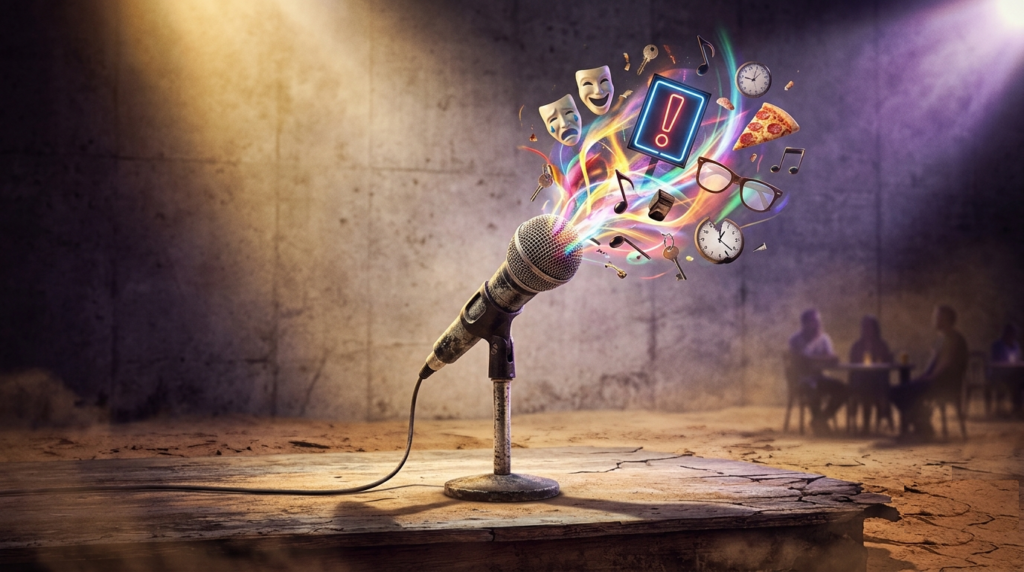

IT TAKES COURAGE TO STAND ALONE ON A STAGE WITH A MICROPHONE, BUT IT TAKES SOMETHING FAR MORE RARE TO MAKE AN ENTIRE ROOM OF STRANGERS LAUGH UNTIL THEY CRY.
Have you ever sat in a comedy audience or watched a televised special and wondered why some performers instantly control the room while others struggle to land a single joke? Stand-up comedy is often called the purest form of performing arts—there are no co-stars, no special effects, and no second takes.
So, what separates a good joke teller from a truly legendary comedian?
It isn’t just luck, and it certainly isn’t just having a naturally funny personality. Behind every great stand-up comedian is a unique combination of psychological mastery, relentless stage practice, and razor-sharp social awareness.
2. Masterful Timing and Rhythm
In stand-up comedy, timing isn’t just important—it is everything. The exact same line delivered half a second too early or too late can turn a roaring laugh into awkward silence.
Comedians treat speech almost like music. The setup builds anticipation, the pause creates tension, and the punchline releases that tension into laughter.
The Power of the Pause
- Creating suspense: A brief pause right before the punchline forces the audience to lean in.
- Tagging jokes: Adding quick extra punchlines (called “tags”) while the audience is still laughing from the main joke.
- Crowd interaction: Knowing how to pivot effortlessly when the audience reacts unexpectedly.
Source: YouTube /
Greg Dean’s Stand-Up Comedy Classes
3. Relatability Combined with Original Observation
Why do we laugh? Most of the time, we laugh because a comedian verbalizes a thought we’ve all had but never knew how to express. This is called observational comedy.
A great comedian takes the mundane, everyday realities of life—relationships, public transit, social anxieties, or family dinners—and looks at them through a completely original lens.
Everyday Experience ➔ Unique Perspective ➔ Unexpected Punchline = Uncontrollable Laughter
- Relatability: The topic feels familiar to the audience.
- Surprise: The conclusion or perspective is completely unexpected.
4. Resilience and the Art of “Crowd Work”
Before any comedian records a hour-long special, they spend years “bombing”—failing miserably on stage in front of silent or hostile crowds. What truly makes a great comedian is their ability to survive failure and learn from it.
Furthermore, elite comedians master crowd work—the ability to improvise in real time with audience members.
- Handling Hecklers: Turning interruptions into hilarious moments without losing control of the room.
- Reading the Room: Adjusting the tone and material depending on whether the audience is energetic, quiet, or skeptical.
- Spontaneity: Making scripted jokes feel like they were just thought of two seconds ago.
Final Thoughts: The Rare Gift of Comedy
At its core, a great stand-up comedian is part storyteller, part philosopher, and part performer. It takes years of dedication to make an incredibly difficult craft look completely effortless. The next time you watch a great set, remember that every seamless joke was refined through countless hours of trial, error, and bravery.
Who do you think is the greatest stand-up comedian of all time? What quality makes them stand out to you? Share your thoughts in the comments below!